Offshore Salesforce Administrator: The ROI for Startups
Hiring a local, dedicated CRM manager often looks less like a strategic asset and more like a runway killer. A true Salesforce administrator does far more than reset passwords. They manage complex user roles, build custom reports, clean duplicate records, and maintain the automated workflows that keep your sales team moving efficiently.
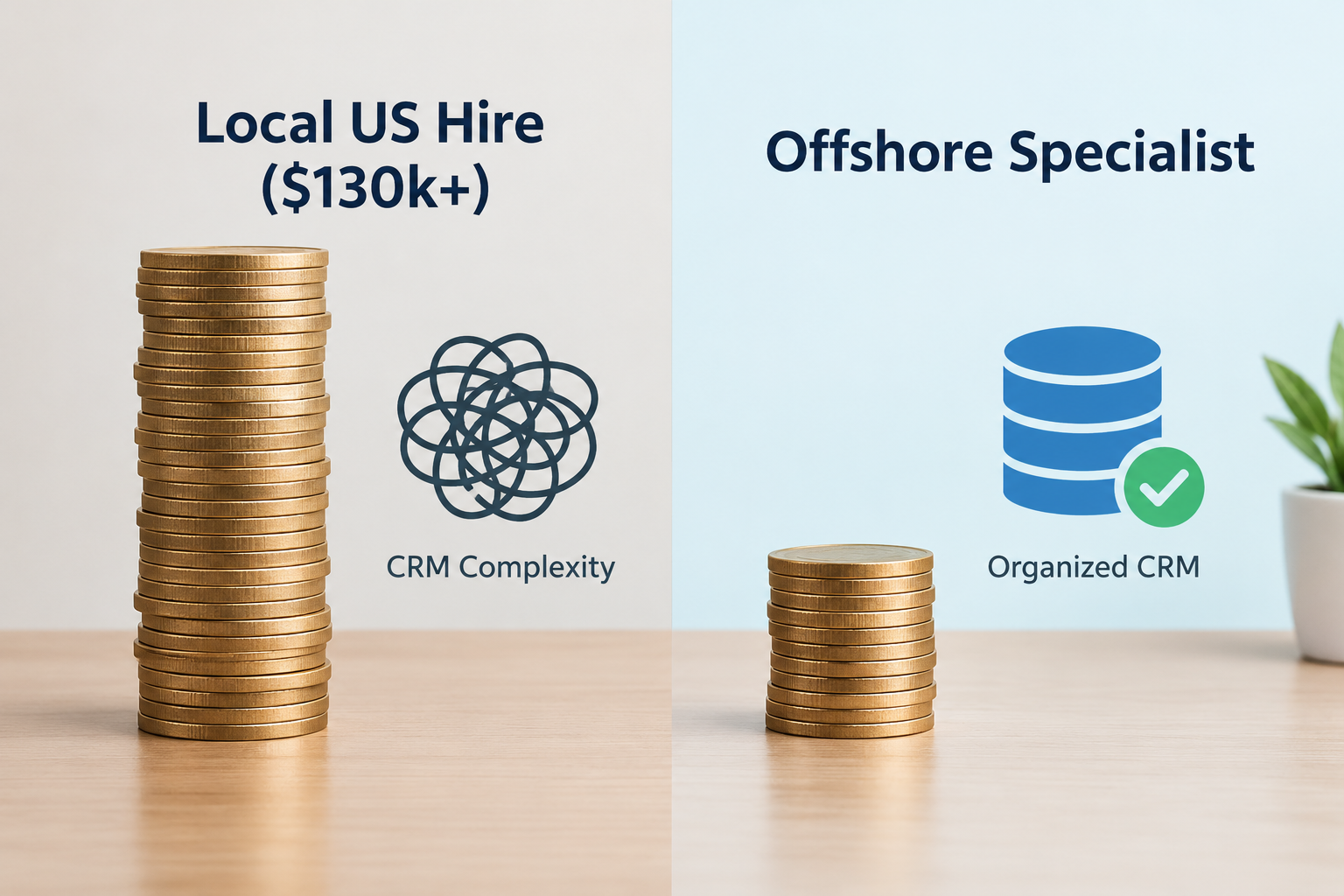
According to the U.S. Bureau of Labor Statistics, the median annual wage for database administrators, the closest federal proxy for a dedicated CRM manager, sits at $101,510. When you factor in payroll taxes, benefits, and standard overhead, the true cost of this single hire routinely pushes well past the $120,000 mark. For a bootstrapped SaaS company, this is a massive cash-flow pressure point just to keep your data clean.
This is exactly why an offshore Salesforce administrator has become an essential tool for effective startup CRM management.
Why Do US Startups Struggle to Hire Local CRM Talent?
The fully loaded cost of a local hire routinely exceeds $120,000, making it mathematically impossible for most early-stage budgets to justify the expense. Founders often try to absorb these complex duties themselves or hand them to an overworked sales representative who lacks technical training. The result is inevitably messy data, broken automations, and a CRM that hinders growth.
You cannot scale a tech-enabled business on a foundation of corrupted records and manual data entry. When the cost of a local hire threatens your survival, you have to look for a smarter operational model.
How Does Cross-Border Remote Hiring Change the Equation?
It turns a massive fixed overhead cost into a predictable, variable expense.
According to research from Global Workplace Analytics, a typical U.S. employer can save an average of $11,000 per year for each half-time remote employee through reduced overhead and operational costs. More importantly, remote work has permanently normalized distributed teams.
Buffer’s 2023 State of Remote Work report found that 98% of remote workers would recommend remote work to others, signaling a massive, highly skilled global workforce that actively prefers this operational model. Bringing an offshore specialist onboard allows you to preserve essential capital for product development while tapping into this established, willing talent market.
Is the Philippines a Viable Source for Technical CRM Roles?
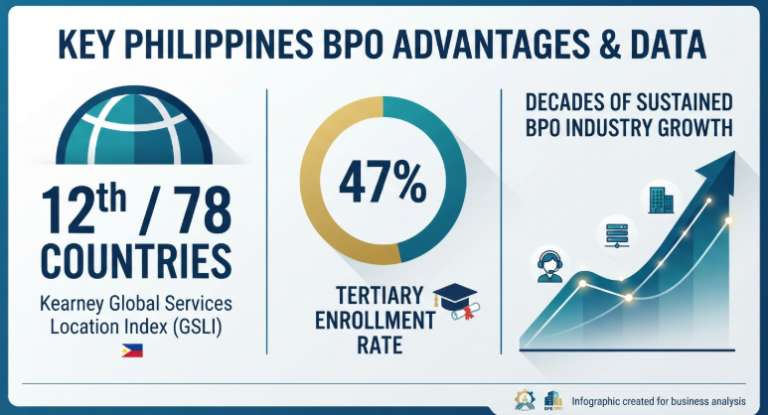
Yes, the country hosts a mature, multi-billion-dollar IT-BPM ecosystem specifically trained in advanced global business processes and technical support.
According to the Philippine Statistics Authority, the industry demonstrates this scale through three key metrics:
- It generated PhP 314.28 billion (approximately $5.6 billion USD) in revenue.
- It employed 849,058 formal-sector workers in 2021, representing a highly trained, institutionalized workforce.
- It represents a formalized infrastructure specifically trained in global business processes, including advanced CRM administration.
This macroeconomic data proves that you are tapping into a deep, professional talent pool, not a makeshift gig economy.
What About Data Security and Compliance Risks?
The risk is minimal because the Philippines operates under a rigorous, GDPR-aligned national privacy framework with active regulatory oversight.
According to the International Association of Privacy Professionals (IAPP), the country’s Data Privacy Act of 2012 is closely aligned with EU privacy standards, sharing core operational principles like lawful processing, enforceable data subject rights, and mandatory 72-hour breach notification.
Furthermore, the National Privacy Commission (NPC) recently issued Circular 2023-06, mandating strict, modernized security measures for personal data processing. Your customer data remains protected under a strict, internationally recognized national standard.
What Tasks Should You Delegate First?
You should immediately delegate the foundational maintenance work that keeps your system healthy but consumes your team’s time. They excel at managing user permissions, building automated lead routing, cleaning duplicate contacts, and generating weekly performance dashboards. By offloading these technical maintenance tasks, your local sales leaders can focus entirely on closing deals and refining strategy, rather than troubleshooting software errors.
How Do You Start without Overcommitting Your Budget?
Start by defining a strict, narrow scope of work and engaging a specialized offshore professional on a flexible, part-time basis. You do not need to hire a full-time, local employee to fix your CRM and drain your budget.
- Audit your current Salesforce instance for broken workflows, missing fields, and duplicate records.
- Identify 5 to 10 hours per week of repetitive maintenance tasks that currently drain your core team’s time.
- Engage a specialized offshore professional on a flexible, part-time basis to handle these specific duties.
This approach lowers the barrier to entry significantly. It allows you to test the operational impact and build trust before making a larger, long-term commitment.
Scaling a business requires making hard, deliberate choices about where to allocate finite resources. Protecting your financial runway does not mean sacrificing data quality or operational efficiency. It means recognizing that top-tier technical talent exists globally.
Accessing that talent is a strategic advantage, not a compromise.
Not sure where to start with your CRM?
Defining the right scope is the first step to a successful hire. Request a Free Business Audit to identify your biggest operational gaps and outline a clear, low-risk role description before you commit to a new team member.