Beyond English: The Value of Filipino Remote Talent Soft Skills
One of the most persistent myth in global hiring is that English proficiency is the primary metric for remote success. It isn’t.
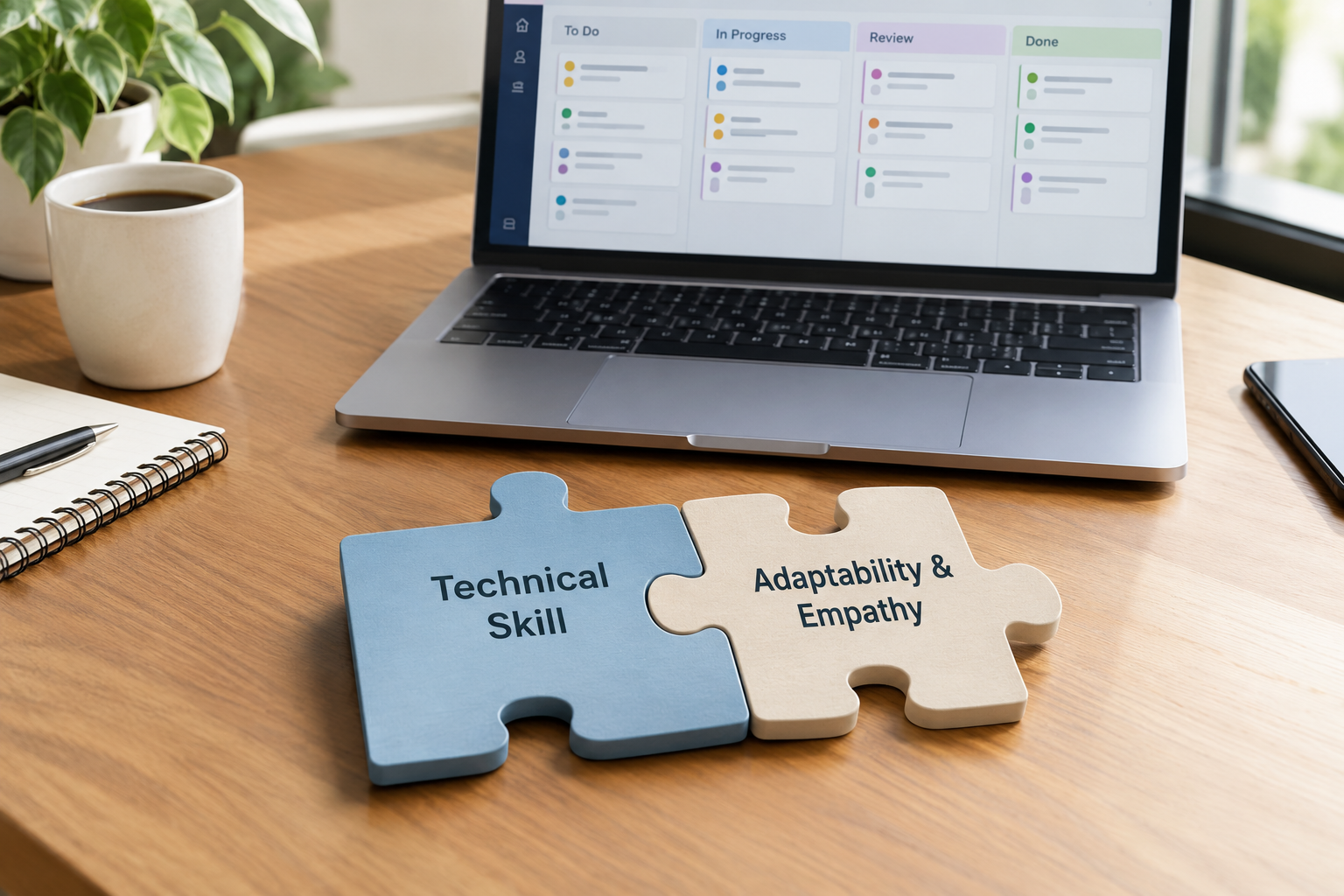
Many digital agency founders and SaaS operators discover this the hard way, often repeating the patterns of why outsourcing failed by prioritizing vocabulary over operational adaptability. They hire a remote professional with flawless grammar, only to find projects stall because language fluency doesn’t automatically translate to the deeper operational soft skills, like adaptability and proactive problem-solving, that actually keep a lean team moving forward.
According to the 2026 Gallup State of the Global Workplace report, 40% of employees globally report experiencing “a lot of stress” daily, and low engagement costs the global economy an estimated $10 trillion. For US small businesses, this translates directly to founder burnout, administrative overload, and the hidden financial drain of constant talent turnover.
What Actually Drives Success in Cross-Border Remote Work?
Success in cross-border remote work is driven by socio-emotional intelligence and proactive problem-solving, not just vocabulary or technical execution.
The conversation around offshore hiring often stalls at language barriers. But the reality of modern digital operations demands more.
For example, a remote professional managing your Salesforce CRM or coordinating your agency’s client onboarding in Asana needs more than vocabulary. They need the socio-emotional intelligence to anticipate bottlenecks before they become client complaints.
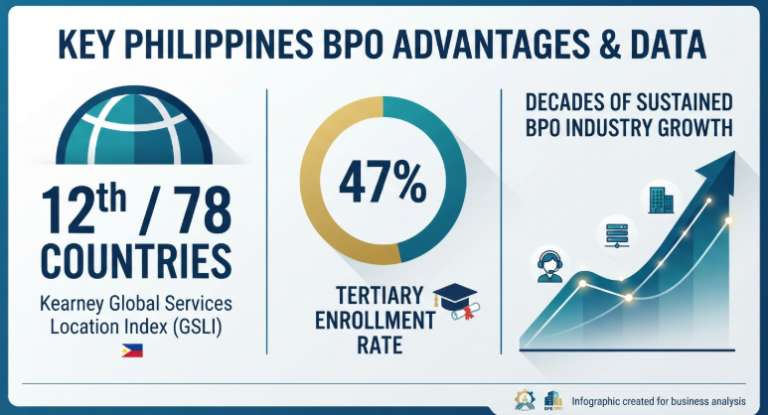
A 2023 World Bank Philippine Jobs Report highlights that the Philippines has evolved far beyond traditional voice-based call centers. The country is now a global leader in non-voice-based services, including software development, healthcare information management, and complex freelancing.
These roles require higher-order cognitive and socio-emotional skills. When you evaluate candidates, you are looking at a workforce actively upskilling in problem-solving, digital adaptability, and autonomous decision-making.
Will Cultural Differences Cause Communication Breakdowns?
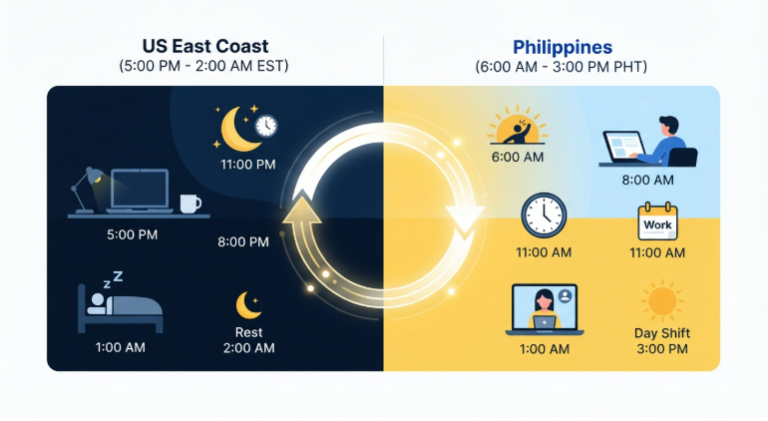
Research shows that Filipino remote workers actively develop specific coping strategies to bridge communication and timezone gaps, rather than letting them become roadblocks.
A 2024 qualitative study of Filipino cross-border remote workers found that while cultural differences and timezone discrepancies present initial challenges, these professionals consistently adapt. The research highlights that successful remote workers in the Philippines proactively improve their communication skills, prioritize tasks effectively to manage asynchronous workflows, and pursue continuous learning to overcome operational hurdles.
This means the fear of a ‘quality drop’ or misalignment is often unfounded when you partner with professionals who have already navigated these cross-border dynamics, provided you also adjust your own management style accordingly.
How Do You Secure Long-Term Loyalty from Remote Professionals?
Just as top-tier US tech startups retain engineers by offering clear growth paths rather than just high salaries, retaining offshore talent requires a similar framework. According to a 2024 Lockton workplace trends report, Filipino professionals highly prioritize work-life balance, flexibility, and professional growth.
When you offer a structured remote engagement with clear development paths, it acts as a powerful retention tool. It transforms a perceived offshore risk into a long-term, loyal partnership. You do not need to micromanage; you need to provide a clear runway for their growth.
Hiring for remote roles is not about finding someone who can simply follow a script in English. It is about finding a partner who can think alongside you. When you shift your hiring criteria to prioritize adaptability, emotional intelligence, and a proven service ethic, the operational friction disappears.
The goal is not just to fill a seat on an org chart. It is to build a resilient extension of your team that operates with quiet competence, allowing you to focus on scaling the business. That is the measurable competitive advantage of looking beyond the resume.
Not sure where to start?
Defining the right role is the first step toward reducing your operational friction. If you are unsure which tasks to delegate first or how to structure a remote engagement for long-term retention, request a Free Business Audit with our team to map out your exact needs before making a hire.