Why American Directness Fails When Managing Filipino Remote Teams
The most common complaint we hear from US founders about their offshore staff isn’t a lack of skill or English proficiency. It’s a perceived lack of initiative.
When a founder gives blunt, direct feedback, they expect a quick course correction and a spirited debate on how to fix it. Instead, they often get silence, over-apologizing, or passive agreement followed by the exact same mistake.
When managing Filipino remote teams, this communication breakdown is rarely a capability issue. It is a predictable cultural mismatch.
Having spent over a decade living and working in the Philippines before returning to the US, our CEO Alex Compton frequently observes this exact pattern among early-stage digital startups. The friction does not stem from a lack of work ethic. It stems from a collision between American low-context directness and Filipino high-context communication norms.
Why Does Direct Feedback Backfire with Offshore Talent?
Direct feedback often fails with offshore talent because it ignores fundamental differences in workplace communication styles. When American founders apply standard domestic management habits abroad, routine operational corrections are frequently misinterpreted. This creates immediate communication breakdowns rather than the productive course correction founders expect.
According to The Culture Factor’s country comparison data, the United States scores 40 on Power Distance and 60 on Individualism. The Philippines scores 94 on Power Distance and 17 on Individualism. This means Filipino workplace culture is highly collectivist, prioritizing group harmony and respecting hierarchical order.
A 2024 peer-reviewed study in the Open Journal of Social Sciences confirms that in these high power distance, high-context societies, subordinates are conditioned to avoid actions or statements that could disrupt social equilibrium. Direct, low-context feedback is frequently perceived as confrontational or disrespectful.
It threatens the cultural concept of “saving face.” The result is not rapid iteration or honest problem-solving. It is disengagement and silence.
Is the Problem the Remote Worker or the Management Style?
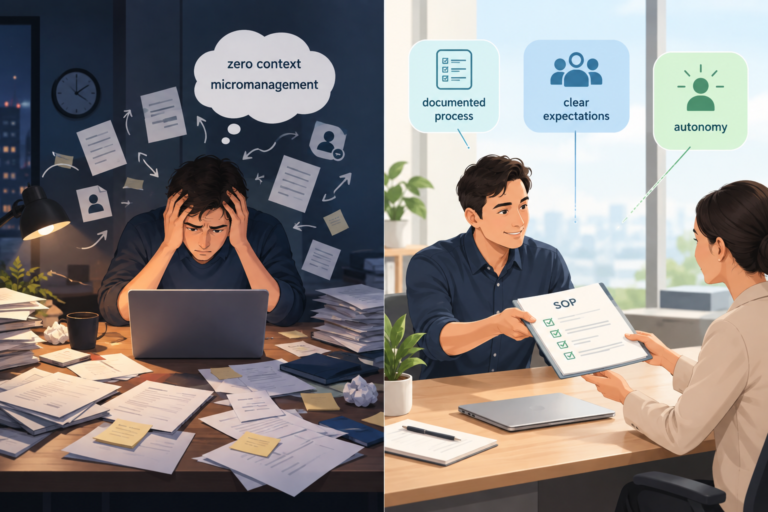
The problem is almost always the management style, not the remote worker. When founders apply standard American communication habits to a high-context culture, everyday operational corrections are misinterpreted as personal attacks. This creates three specific breakdowns in how feedback is received and processed:
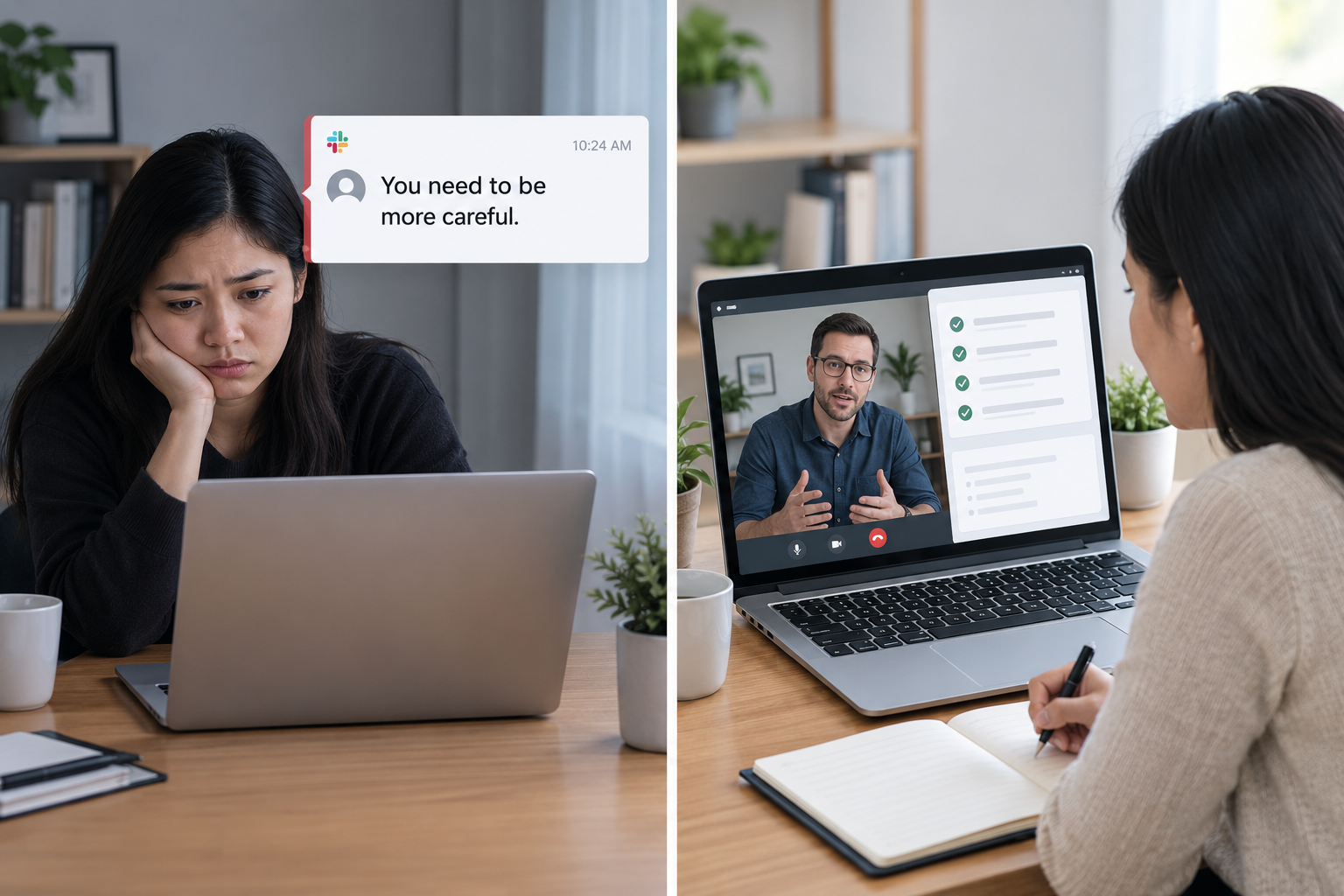
- Blunt messages read as hostility. A quick Slack correction intended as “efficient” is often received as a personal reprimand.
- Public corrections trigger shame. Pointing out an error in a group channel causes the worker to withdraw to preserve harmony, rather than openly debate the fix.
- Silence is conflict avoidance. A quiet “yes” or “noted” is often a polite way to de-escalate tension, not a genuine agreement with the proposed solution.
Gallup’s 2023 State of the Global Workplace report makes this dynamic clear. Their analysis finds that employee engagement has 3.8 times as much influence on daily stress as work location. Furthermore, 70% of team engagement is attributable to the manager.
The report explicitly advises leaders to ask if poor remote performance is a location problem or a management problem. If your remote worker is silent, the first variable to audit is your feedback delivery.
How Can US Founders Adjust Their Delegation Style?
Think of it like adjusting your playbook for a new roster. You do not change the core functionality, but you adjust the user experience so it makes sense to the local operator.
Instead of blunt directives, shift to an inquiry-based style. Frame feedback around the process, not the person.
Consider a scenario where an employee submits a report with data errors. A person-focused approach sounds like this: “You are being careless with these reports. You need to be more detail-oriented and stop making these same mistakes.” This attacks the individual’s character and guarantees defensiveness.
A process-focused approach sounds like this: “I noticed a few data discrepancies in the last two client reports. Let’s look at the current review workflow together. How would you approach this differently moving forward to catch those errors before they go out?”
This isolates the specific outcome. It removes personal judgment and invites the employee to co-create the solution. That builds ownership rather than shame.
Finally, prioritize structured 1:1 meetings. The 2023 State of Remote Work report by Buffer notes that 15% of remote workers struggle with collaboration, and the most successful companies counter this by having 71% of managers prioritize regular 1:1s over ad-hoc directives.
What Is the Actual Cost of Ignoring Cultural Context?
The cost is the silent attrition of your best offshore talent. Just as a SaaS company would not launch a product without localizing the user interface, a US startup should not deploy a Silicon Valley management style in Manila without localizing the communication.
The talent pool is highly educated, adaptable, and world-class, but the management operating system must be compatible to realize that capability.
You do not have to lower your standards. You simply have to change the delivery mechanism. When you replace blunt directives with structured, empathetic inquiry, the silence breaks. The initiative returns. And the remote team you thought was passive suddenly becomes your most proactive asset.
Not sure where to start?
Defining the right role and communication framework is the first step to a successful remote hire. Request a free business audit with our team to identify your operational gaps and scope a role that fits your workflow.