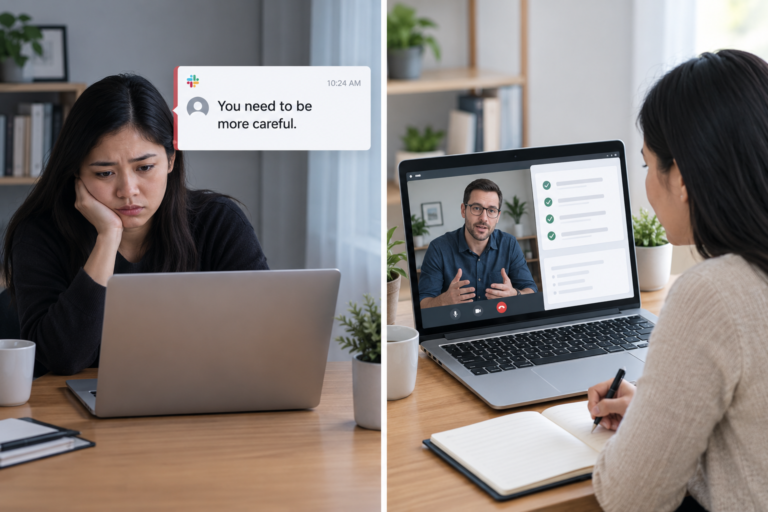
The Digital Course Backend Operations Checklist
Many course creators hit a specific, predictable ceiling. Student enrollment grows, but the founder’s capacity to manage the backend shrinks. You are no longer just teaching or recording modules. Instead, you end up staring at a dashboard of unresolved tickets at 10 PM instead of planning your next module, manually onboarding students, and moderating community forums. This operational drag is a well-documented pattern.
According to a 2023 Ramsey Solutions report, 42% of small-business owners experienced burnout in the year leading up to the survey, and 56% reported feeling entirely alone in solving problems and making business decisions. If your course is scaling but your personal energy is depleting, the issue is not your content. It is your digital course backend operations. You are trying to be the CEO, the instructor, and the IT department all at once.
Why Is Delegation a Standard Operating Procedure for Growth?
Delegation is no longer a luxury reserved for large corporations; it is a standard operating procedure for sustainable growth.
Instead of trying to hire a full-time local employee for fragmented, part-time tasks, the market is shifting toward dedicated, flexible support. According to Upwork’s 2023 Freelance Forward report, 64 million Americans engaged in freelance work (representing 38% of the U.S. workforce), with over half of them providing specialized knowledge services like IT, marketing, and business consulting. The goal is to separate your strategic work, like curriculum design and marketing, from your repetitive, time-consuming administrative work.
When you hold onto every small task, you become the bottleneck in your own business.
What Makes the Philippines a Strategic Option for These Roles?
The Philippines is a primary hub for remote talent due to its massive, consistent output of university-educated graduates. This formalized higher education system creates a deep, accessible workforce that is naturally equipped to handle complex administrative and technical roles.
According to the Philippine Statistics Authority, this pipeline is backed by hard numbers. In a single recent academic year, the country produced over 86,000 graduates in Business Administration and over 31,000 in IT-related disciplines. For a digital course creator, this means the available talent pool is formally educated in the exact disciplines required to manage learning management systems, manage technical workflows, and maintain professional community standards.
Will Outsourcing Compromise the Quality of the Student Experience?
No. Outsourcing does not compromise quality when structured correctly. Delegating administrative tasks to a dedicated remote professional ensures consistent support and frees up your bandwidth for high-level instruction.
Consider how enterprise software companies operate. They do not keep their core engineering teams bogged down in tier-one customer support. They build dedicated, specialized teams to handle it efficiently so the core product remains the priority.
The same logic applies to your online education business.
Your students will not know the difference, except that their questions get answered faster and with greater accuracy. A 2024 Colliers Philippines report highlights that the Philippine IT-BPM industry revenue grew 7% to reach $38 billion, with major global firms like Accenture, Concentrix, and Telus aggressively expanding their local office footprints. These companies do not scale in a market where quality is inconsistent. They scale because the infrastructure, English proficiency, and talent reliability are proven at an enterprise level.
What Belongs on a Digital Course Backend Operations Checklist?
A digital course backend operations checklist should focus on three core areas: student onboarding, community management, and tier-one tech support. You do not need to hand over the entire business on day one; instead, begin by identifying exactly what to hand off, because You Don’t Need Another Hire. You Need a Task Audit first. Once you know what to delegate, target the repetitive tasks that drain your week but directly impact the student experience:
- Student Onboarding: Instead of manually granting LMS access and chasing down “I didn’t get my login” emails, this role manages the welcome sequence and sends structured follow-ups to reduce early drop-off.
- Community Management: Rather than letting the discussion board become a ghost town or a chaotic thread, this role answers routine FAQs, enforces guidelines, and flags only the complex curriculum questions for you.
- Tier-One Tech Support: Before a video playback error or a payment glitch turns into a frustrated refund request, this role troubleshoots the immediate technical friction.
Documenting these tasks does not require a 50-page operations manual. A simple screen recording of you doing the task once, paired with a basic checklist, is enough to get a dedicated team member up to speed.
Scaling a digital course should mean reaching more students, not working more hours. When you systematically remove this administrative drag, you reclaim the quiet focus required to do what only you can do: create better content. The operational foundation isn’t just about saving time; it’s about protecting the energy you need to teach.
Not sure where to start delegating?
Before hiring, it helps to map out exactly what needs to be handed off. Request a Free Business Audit from ValorPro to define the scope, role, and processes for your first dedicated team member, ensuring a low-risk, high-impact start.